Washer Won't Drain? Here's What's Actually Going On
Washer will not drain in your Dallas home? Learn the real causes, safe DIY checks, and when to call DLT Appliance Repair for same-day service across North Dallas.
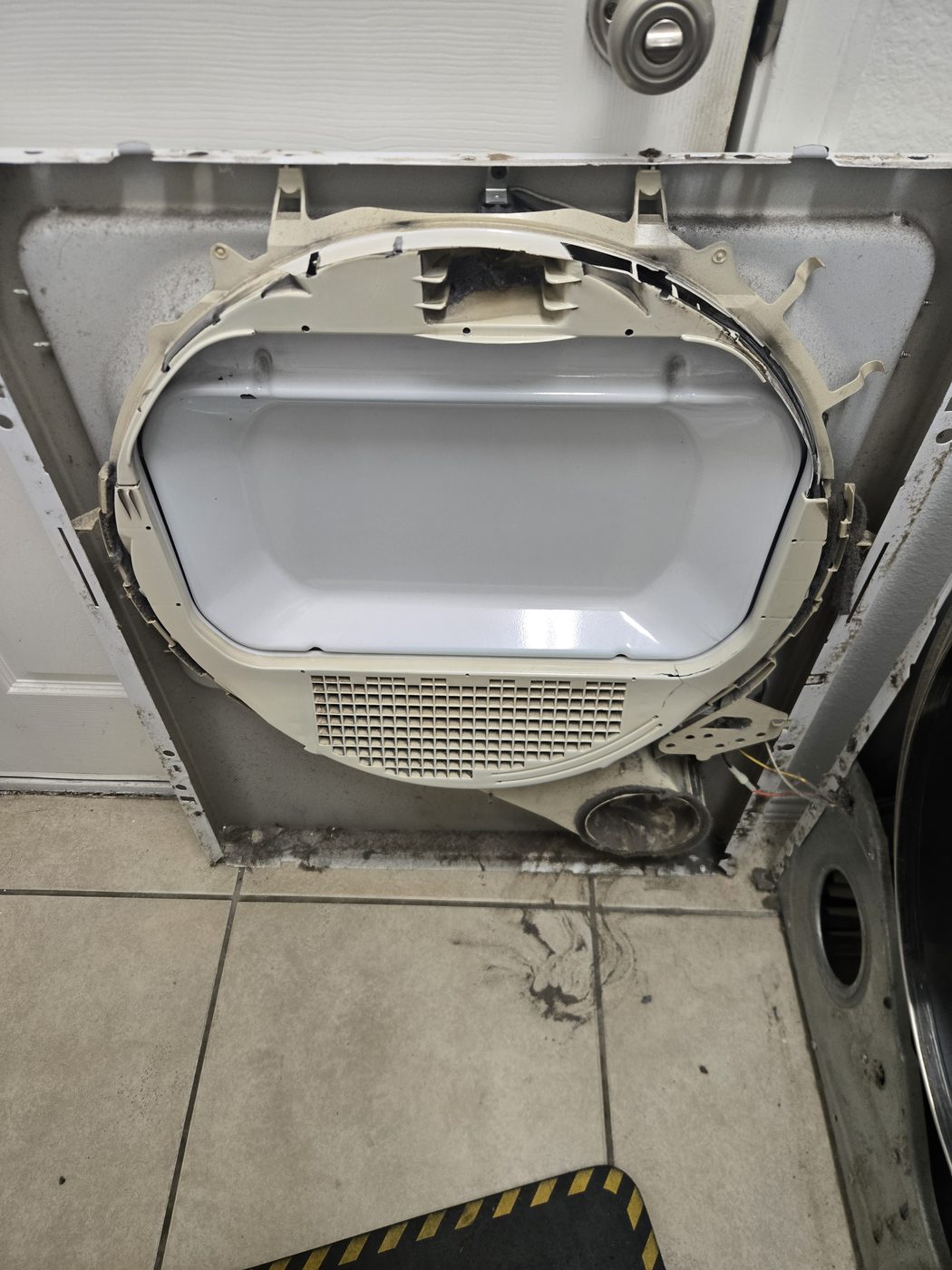
You start a normal load, walk away, and come back to a tub full of gray water sitting on top of your clothes. It is one of the most common calls we get, and the good news is that a washer that will not drain is usually a fixable problem, not a dead machine. The trick is knowing what to check, what is safe to touch yourself, and when the smart move is to call a pro.
Here is what is actually going on when your washer leaves standing water behind, and how we track it down.
First, rule out the simple stuff
Before you assume the worst, take a breath. A surprising number of “washer will not drain” problems come down to something small.
The drain hose
The hose at the back of your machine can kink, especially if the washer was recently pushed back against the wall. It can also be pushed too far down into your standpipe or drain, which creates a siphon and confuses the machine. Pull the washer out a few inches and look for obvious kinks or crushed spots. The hose should sit in the standpipe no more than a few inches deep.
A load that is off balance
Front-load and high-efficiency top-load washers will refuse to drain and spin if the load is lopsided or overloaded. If the machine stopped mid-cycle with an error code, try redistributing the clothes and restarting. Sometimes that is the whole fix.
The lid switch or door lock
Your washer will not drain or spin if it does not believe the lid or door is closed. On top-loaders there is a small lid switch that can wear out. On front-loaders, the door latch has to lock before the cycle proceeds. If the machine acts like nothing is wrong but never drains, a failed switch or latch is a strong suspect.
The number-one culprit: the drain pump
When the easy checks come up empty, the drain pump is where our attention goes.
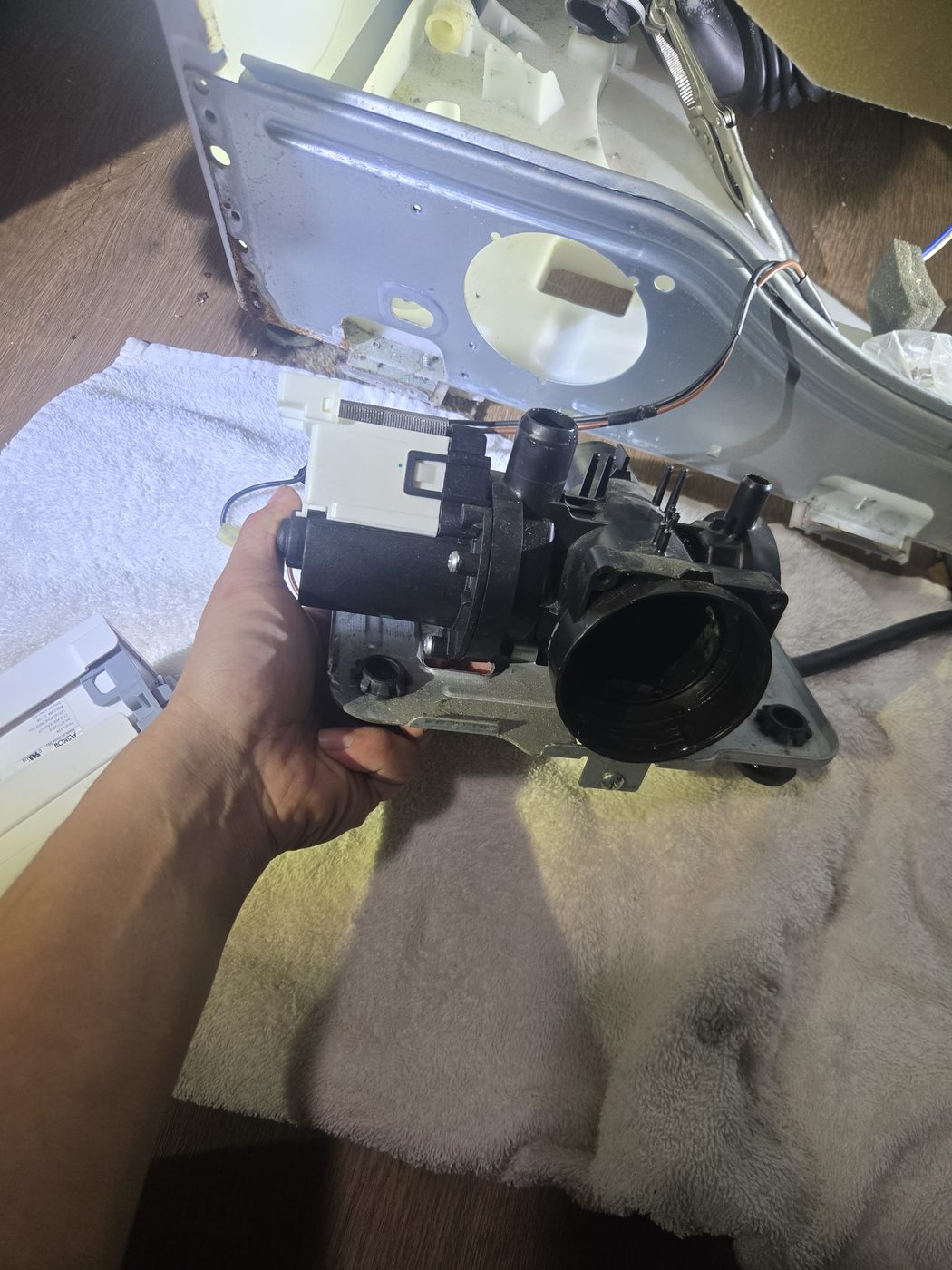 A clogged or burned-out drain pump is the number-one reason a washer leaves standing water.
The drain pump does exactly what it sounds like. It pushes the water out of the tub and into your drain. Over years of use, two things tend to happen. Small items get sucked into it, or the pump motor simply wears out.
Clogs
Coins, hair pins, socks, and the underwires from bras are the usual offenders. They get past the tub and lodge in the pump or the filter that sits in front of it. Many front-loaders have an access panel near the bottom front with a removable filter trap. If yours does, and you are comfortable, you can open it (put down towels first, because water will come out) and clear whatever is stuck. You would be amazed what we pull out of these.
A failed pump
If the pump hums but does not move water, or makes no sound at all, the motor or its windings may have failed. We test the pump for continuity and proper operation before condemning it, because there is no sense replacing a good part. This is the heart of how we work: we test and replace only the component that actually failed, so you are not paying for a guess.
When the problem is not where the water is
Here is something homeowners rarely expect. A drainage complaint does not always start at the drain. If a machine overfills, it can look like a draining problem when the real issue is on the fill side.
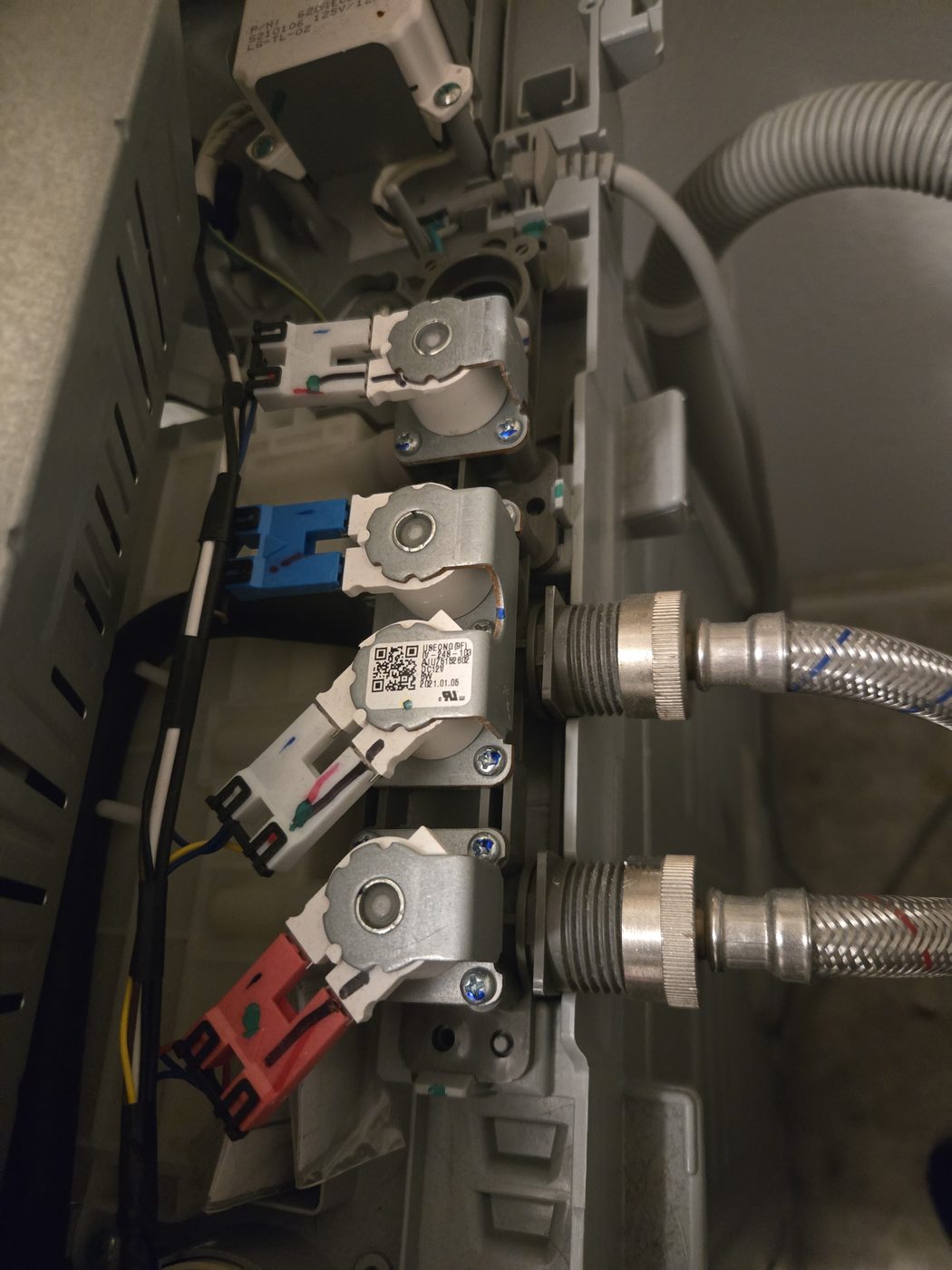 Inlet valves and hoses get inspected too — drainage problems are not always where the water shows up.
A stuck water inlet valve can let the tub keep filling past its normal level, overwhelming the machine and tripping errors that mimic a drain fault. That is why a proper diagnosis looks at the whole water path, not just the pump. Guessing at one part while ignoring the rest is how people end up paying twice.
Clogs deeper in the system
Sometimes the pump is fine and the blockage is downstream.
The internal hoses
Between the tub and the pump sits a length of hose that can trap the same debris a pump filter would. On many machines this hose also holds a small pressure switch line that tells the control board how full the tub is. Buildup here can cause slow draining or no draining at all.
Your home drain line
If water backs up out of the standpipe when the washer tries to drain, the problem may be your home’s plumbing, not the appliance. A partially clogged standpipe or drain line will stop a perfectly healthy washer from emptying. In that case a plumber, not an appliance tech, is who you want.
A quick word on safety
Most drain checks are homeowner-friendly, but know your limits. Washers combine water and electricity, so always unplug the machine before you reach into the pump area or pull hoses. If you have a gas dryer stacked nearby, do not disturb the gas line. And if you ever smell burning or see scorched wiring around the pump or control board, stop and call a professional. Those are not DIY territory.
When to call DLT
If you have checked the hose, the load, and the filter and your washer still will not drain, it is time to bring in someone who can test the pump, valve, and control board properly and fix only what failed. We offer same-day service across the North Dallas Metroplex, from Richardson and Plano to Garland, Mesquite, Irving, and Carrollton, with upfront pricing after we diagnose the problem and a written warranty behind the work. Give DLT Appliance Repair a call at (972) 674-0674 and we will get your laundry moving again.