Why Your Refrigerator Stops Cooling (And What a Real Fix Looks Like)
Refrigerator not cooling? Learn the common causes, what's safe to DIY, and what a real component-level fix looks like. Same-day service across the North Dallas Metroplex.
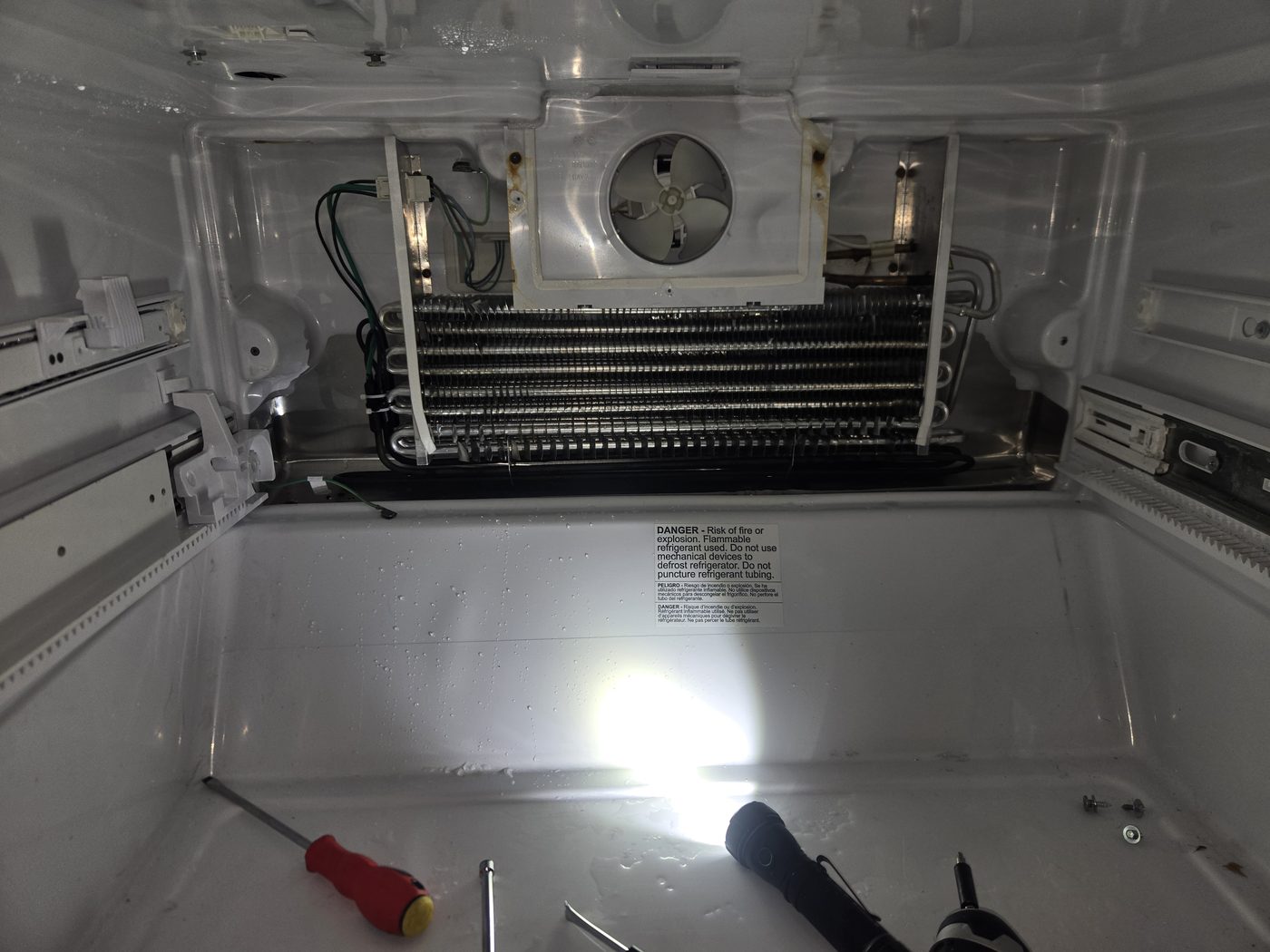
A warm refrigerator is one of those problems that goes from annoying to urgent in a matter of hours. One morning the milk tastes off, the freezer feels soft, and suddenly you are wondering how much of your groceries you are about to lose. If your refrigerator is not cooling, the good news is that most causes are specific, testable, and fixable without replacing the whole appliance. Here is what actually goes wrong, and what an honest repair looks like.
Start with the easy stuff
Before you assume the worst, rule out the simple things. They are more common than people expect.
Airflow and door seals
A fridge cools by moving cold air, so anything blocking that airflow raises the temperature. Check that food isn’t packed against the rear vents inside the fresh-food compartment, and make sure the freezer isn’t so overloaded that air can’t circulate. Then look at the door gaskets. If the rubber seal is torn, stiff, or no longer grabbing a dollar bill when you close the door on it, warm air is leaking in and your compressor is fighting a losing battle.
Power, settings, and coils
Confirm the temperature dial hasn’t been bumped and that the unit is actually running. Then pull the fridge out and look at the condenser coils, usually behind a grille at the bottom or on the back. When those coils are caked in dust and pet hair, the refrigerator can’t shed heat and cooling suffers. A gentle vacuum once or twice a year genuinely helps.
If you have cleaned the coils, checked the seals, cleared the vents, and the box is still warm, the problem is a component. That is where testing matters.
The parts that usually fail
When homeowners tell us “my refrigerator is not cooling,” the culprit is very often one of a handful of parts. A real diagnosis means testing them, not guessing.
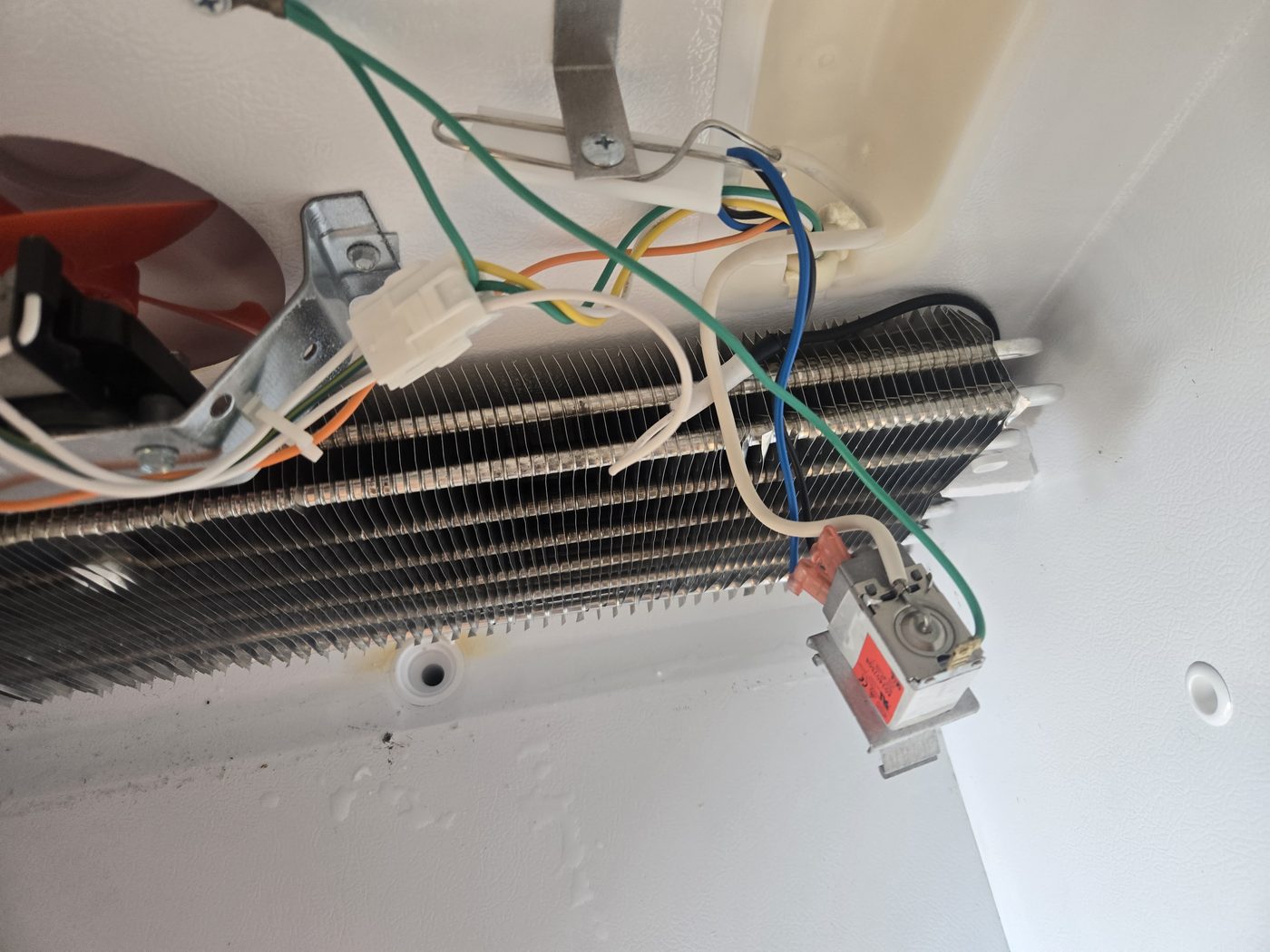 Frost on the evaporator coils and a failed thermistor are common reasons a fridge stops cooling.
Evaporator fan motor
Most modern refrigerators cool the fresh-food side by blowing air over the freezer’s evaporator coils. If the evaporator fan motor quits, the freezer may still feel cold while the refrigerator section slowly warms up. A classic sign is a freezer that seems fine and a fridge that doesn’t. This is a common, straightforward replacement.
Defrost system
The evaporator coils frost up during normal operation, and a defrost cycle is supposed to melt that frost periodically. When the defrost heater, defrost thermostat, or control board fails, ice builds into a solid block over the coils and chokes off airflow. The tell-tale sign is cooling that comes and goes, or a wall of frost behind the freezer’s rear panel. Fixing it means identifying which piece of the defrost system failed rather than swapping parts blindly.
Thermistor and control board
The thermistor is a small sensor that tells the control board how cold the box actually is. If it reads wrong, the board either never calls for cooling or runs it at the wrong time. These are inexpensive parts, but they require a meter to test correctly, which is exactly the kind of component-level check that separates a real fix from a parts-cannon.
Start relay and compressor
If you hear the compressor trying to start with a click and a hum and then shutting off, the start relay is a frequent offender and an easy swap. The compressor itself is the heart of the system, and a true compressor failure is a bigger conversation about whether repair still makes sense.
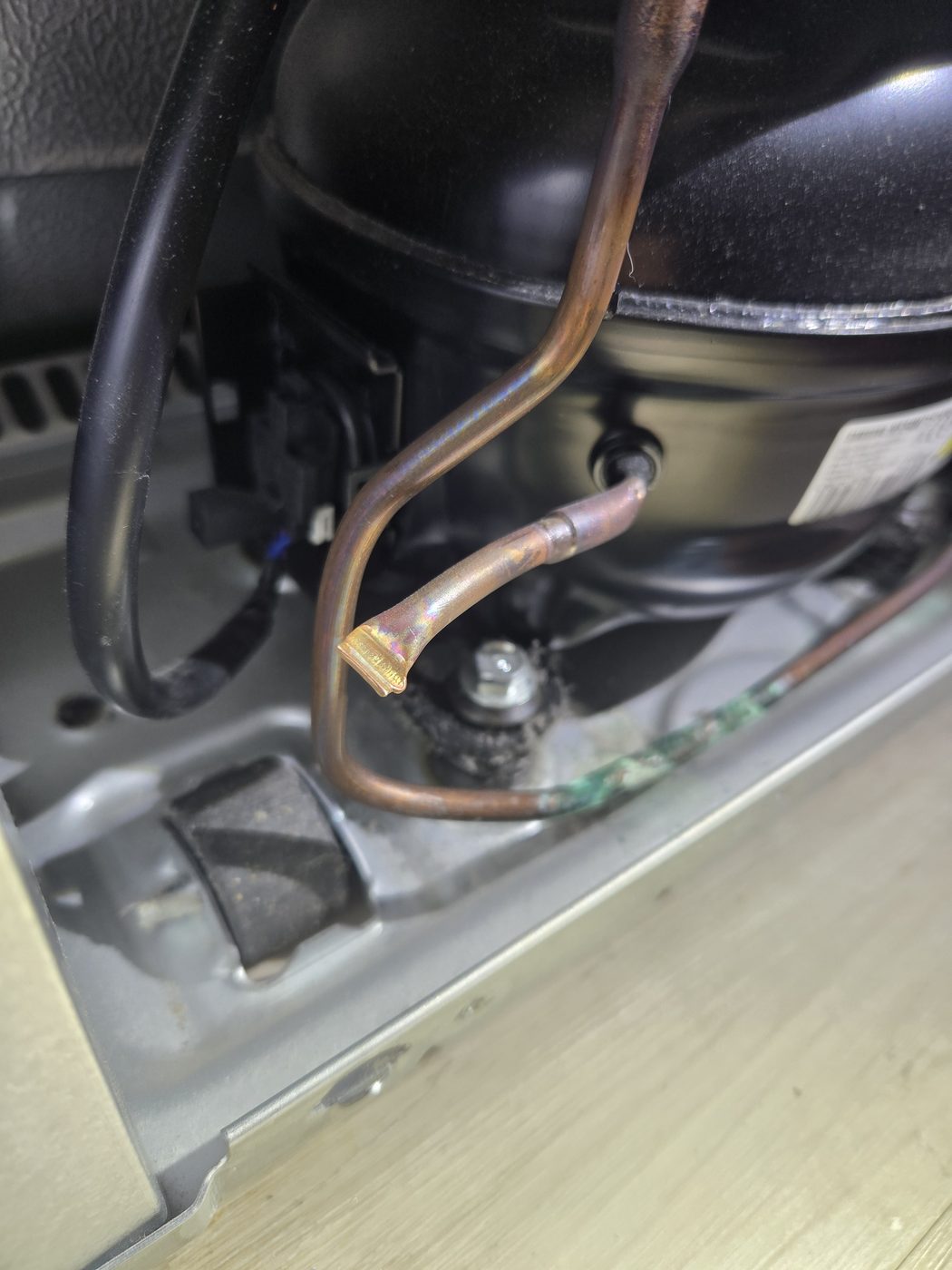 The compressor and condenser coils at the bottom of the fridge, part of the sealed system we test before condemning.
Where DIY should stop
Some of this is homeowner-friendly. Cleaning coils, checking seals, and clearing vents are all fair game. Some of it is not.
The sealed refrigerant system, meaning the compressor, condenser, evaporator, and the lines connecting them, is not a DIY repair. It runs under pressure, requires EPA-certified handling of refrigerant, and demands specialized tools. If the diagnosis points to a refrigerant leak or a failed compressor, that is a job for a licensed professional, full stop. The same caution applies to any repair involving the household 240V circuit or hardwired power. When in doubt, don’t force it.
What a real fix looks like
A trustworthy repair follows a pattern. We diagnose first, then test the suspect part with a meter to confirm it actually failed, and only then replace it. We don’t throw parts at the wall and hope. Because we repair at the component level, you pay to fix the thing that broke rather than for a laundry list of parts that were fine. You get upfront pricing after the diagnosis, so there are no surprises, and the work is backed by a written 90-day parts and 30-day labor warranty. Being licensed and insured is the baseline, not the selling point.
Sometimes the honest answer is that a repair isn’t worth it on an aging unit, and we will tell you that too.
When to call DLT
If your refrigerator is still warm after you have cleaned the coils and checked the seals, or if you are hearing clicking, seeing frost buildup, or smelling spoiled food, it is time to have it tested properly before you lose another grocery run. DLT Appliance Repair is family-owned and offers same-day service across the North Dallas Metroplex, from Plano and Richardson to Garland, Mesquite, Irving, and Carrollton. Give us a call at (972) 674-0674 and we will get your fridge cold again.