Frost Buildup in Your Fridge? The Defrost System, Explained
Refrigerator frost buildup usually means a failed defrost system. Learn the signs, DIY checks, and when to call DLT for same-day repair across the North Dallas Metroplex.
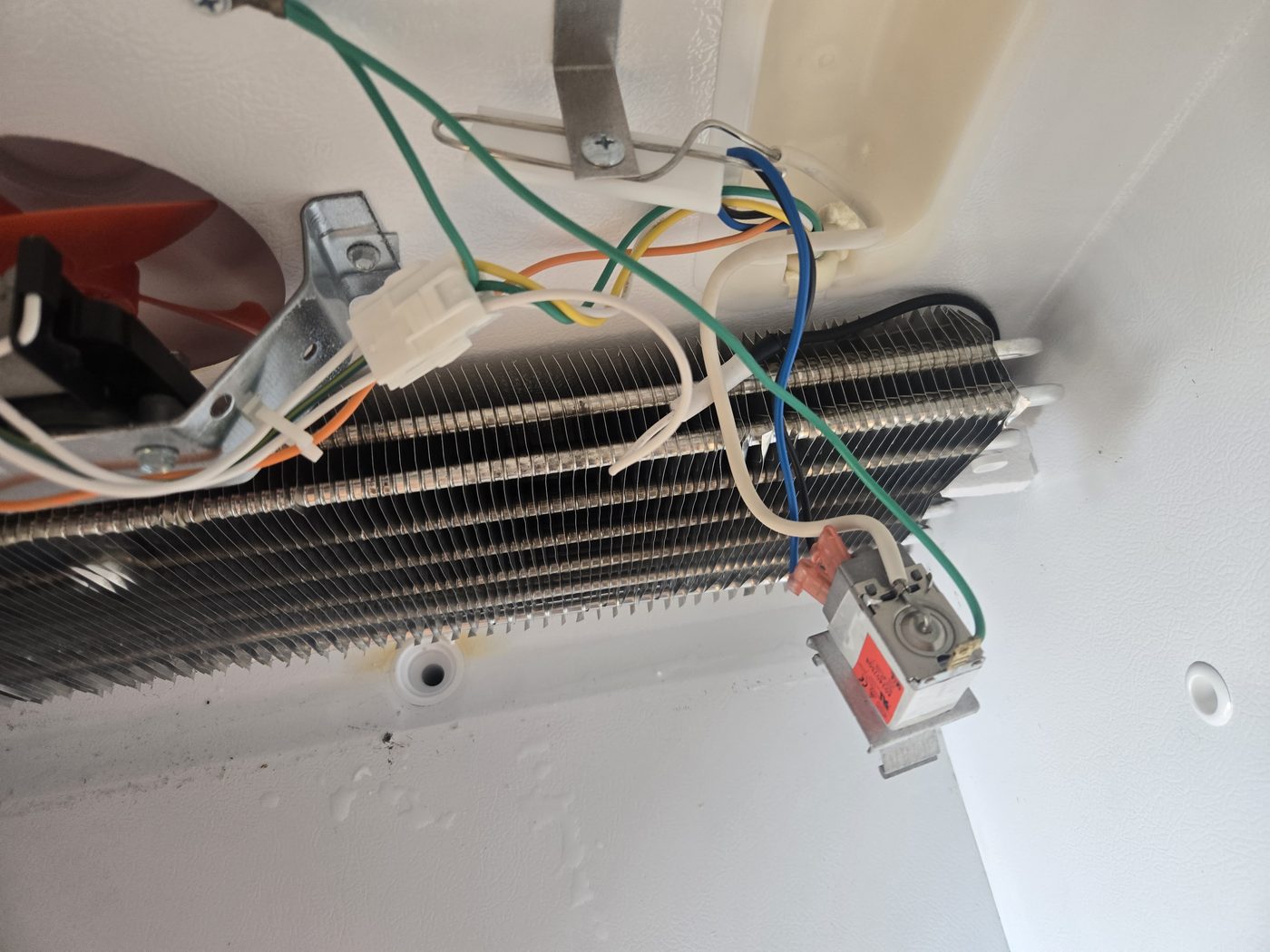
Open your freezer and find a wall of white where smooth metal should be? A little frost is normal. A thick, growing crust is not. In a modern frost-free refrigerator, that ice is almost always a symptom of one thing: the automatic defrost system has stopped doing its job. Understanding refrigerator frost buildup and how the defrost cycle works will help you tell a quick fix from a repair that needs a technician.
How a frost-free fridge is supposed to stay clear
Your refrigerator does not actually make cold air in the fresh-food compartment. It makes cold in a set of coils called the evaporator, usually hidden behind a panel inside the freezer. A fan blows air across those coils, and that chilled air is what keeps both the freezer and the fridge sections cold.
Here is the catch. Every time cold air meets the humidity from food and from the door being opened, a thin layer of frost forms on those coils. That is unavoidable and by design. To keep the frost from piling up, the fridge runs an automatic defrost cycle several times a day.
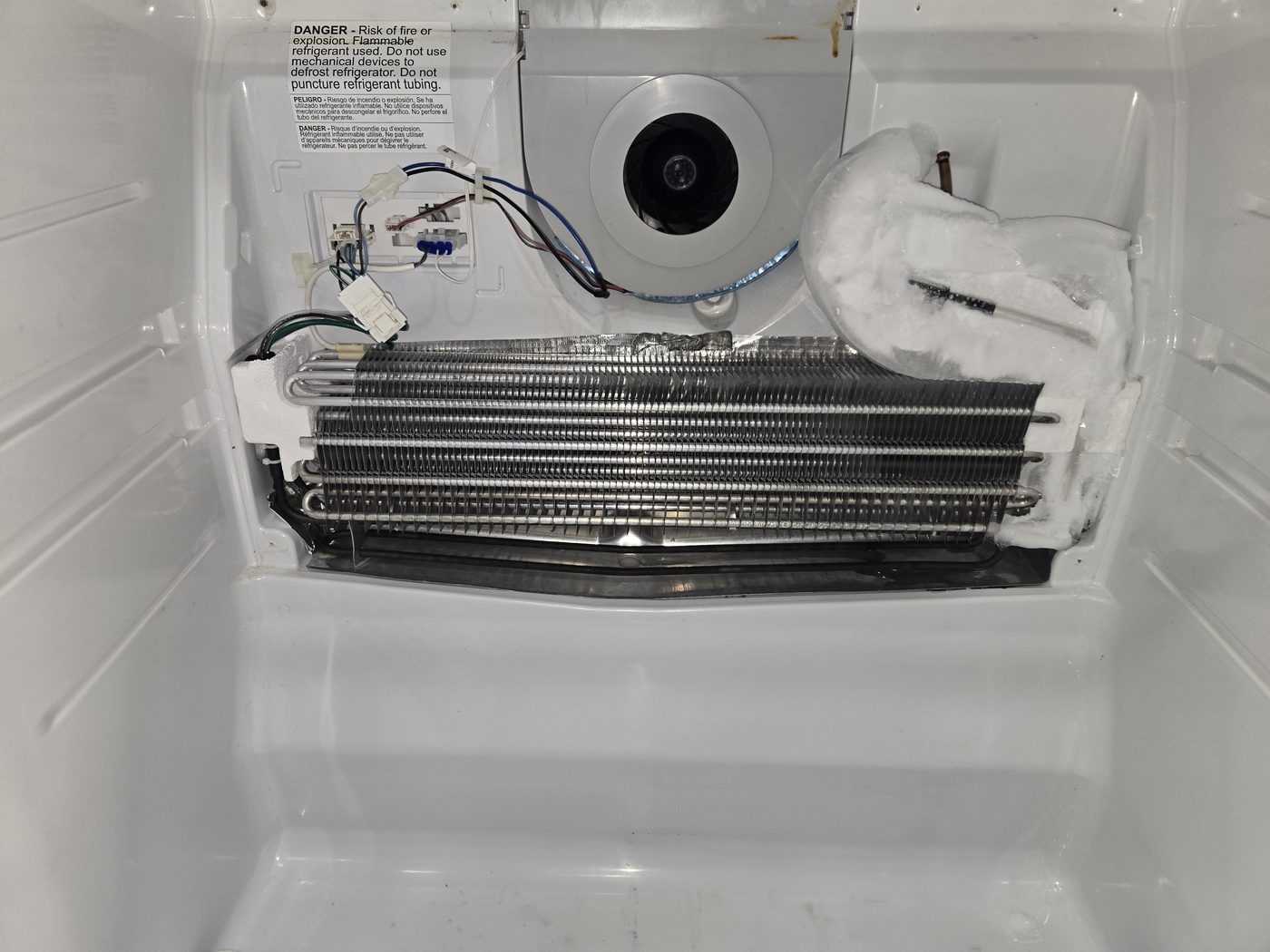 When the defrost cycle fails, ice armors the evaporator coils and cooling drops off.
The three parts that clear the coils
The defrost cycle is a small team of components, and they all have to cooperate. When one fails, frost wins.
The defrost heater
Tucked in or around the evaporator coils is a heating element. On a schedule, it warms up just enough to melt the frost off the coils. The water drips down into a drain and eventually evaporates from a pan near the compressor. If the heater burns out, nothing melts the frost, and it keeps stacking up cycle after cycle.
The defrost thermostat
This little sensor makes sure the heater only runs when the coils are actually cold and frosted, then shuts it off once they warm up. A failed defrost thermostat can leave the heater stranded and unable to turn on.
The defrost control (timer or control board)
Something has to decide when to interrupt normal cooling and trigger a defrost. On older units that is a mechanical timer. On newer ones it is an electronic control board, sometimes paired with a sensor called a thermistor. If the control never calls for a defrost, the heater and thermostat never get their cue.
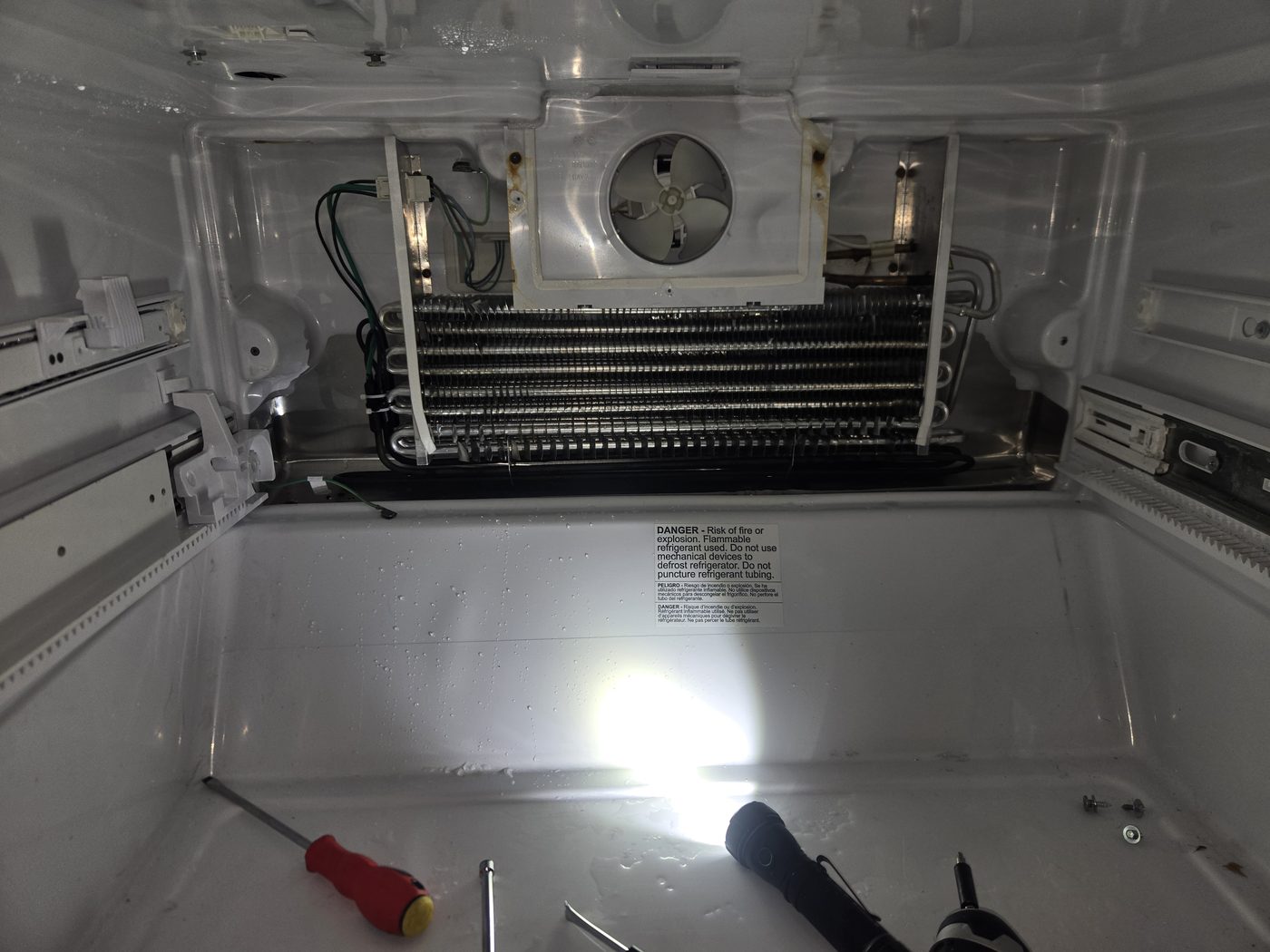 The defrost heater, thermostat and control all have to work together to keep coils clear.
Signs the defrost system is the culprit
Frost buildup rarely shows up alone. Watch for these companions:
- A freezer that still works but a fridge section that is warming up. This is classic. Ice blocks the coils, the fan can no longer push air, and the fresh-food side loses cooling first.
- Thick frost specifically on the back inside wall of the freezer, where the coils sit behind the panel.
- A fan that sounds like it is buzzing, straining, or rattling because it is hitting ice.
- Food thawing in the fridge while the freezer stays hard-frozen.
If you defrost the whole unit manually by unplugging it for a day and the problem comes right back in a week or two, that is a strong sign the defrost system, not your habits, is at fault.
What you can check yourself, and what to leave alone
There are a few honest DIY steps. Make sure the doors seal fully and that gaskets are not torn, because a poor seal pulls in humid room air and accelerates frost. Confirm the fridge is not jammed so full that air cannot circulate. Check that the freezer temperature is set in a sensible range, roughly 0 degrees Fahrenheit, and not colder than it needs to be.
Beyond that, diagnosing which of the three defrost parts failed means testing components with a meter and getting behind that inner panel. That work involves live electrical connections and, on some models, disconnecting wiring you do not want to guess at. If you are not comfortable there, this is the point to stop and call a pro. We test each part and replace only the one that actually failed rather than throwing parts at the problem.
Do not ignore it
A little frost is cosmetic. A blocked evaporator forces the compressor to run longer and harder, drives up your energy bill, and can eventually shorten the life of the most expensive part in the appliance. Catching a bad heater or thermostat early is a modest repair. Letting it run for months is not.
When to call DLT
If you have cleared the frost once and it is already creeping back, or your fridge is warming while the freezer stays cold, the defrost system is the likely offender and it is worth a professional look. DLT Appliance Repair is family-owned, licensed and insured, and offers same-day service across the North Dallas Metroplex, from Plano and Richardson to Garland, Mesquite, Irving, and Carrollton. We give you upfront pricing after we diagnose the problem and back the work with a written 90-day parts and 30-day labor warranty. Call us at (972) 674-0674 and we will get your refrigerator back to running the way it should.