Front-Load vs Top-Load Washer Repairs: What Owners Should Know
Front load vs top load washer repair explained: common failures, what costs more, safe DIY checks, and same-day help across the North Dallas Metroplex.
Choosing between a front-load and a top-load washer used to be a style question. When something breaks, though, the design of your machine shapes almost everything that follows: which parts tend to fail, how hard they are to reach, and what the repair costs. If you are weighing a front load vs top load washer repair decision, or just trying to understand a strange noise or a puddle on the laundry room floor, here is a plain-English breakdown from the bench.
How the two designs actually differ
A top-load washer fills a vertical tub and moves clothes with either a center agitator or a low-profile impeller plate. A front-load washer spins a horizontal drum, tumbling clothes through a smaller pool of water. That single difference in orientation drives most of the repair story.
Front-loaders are gentler on fabric and use less water, but the horizontal drum puts constant load on a set of sealed bearings and a rubber door boot. Top-loaders are mechanically simpler in some ways, but agitator models add a transmission and clutch that can wear out. Neither design is “more reliable” across the board. They just fail differently.
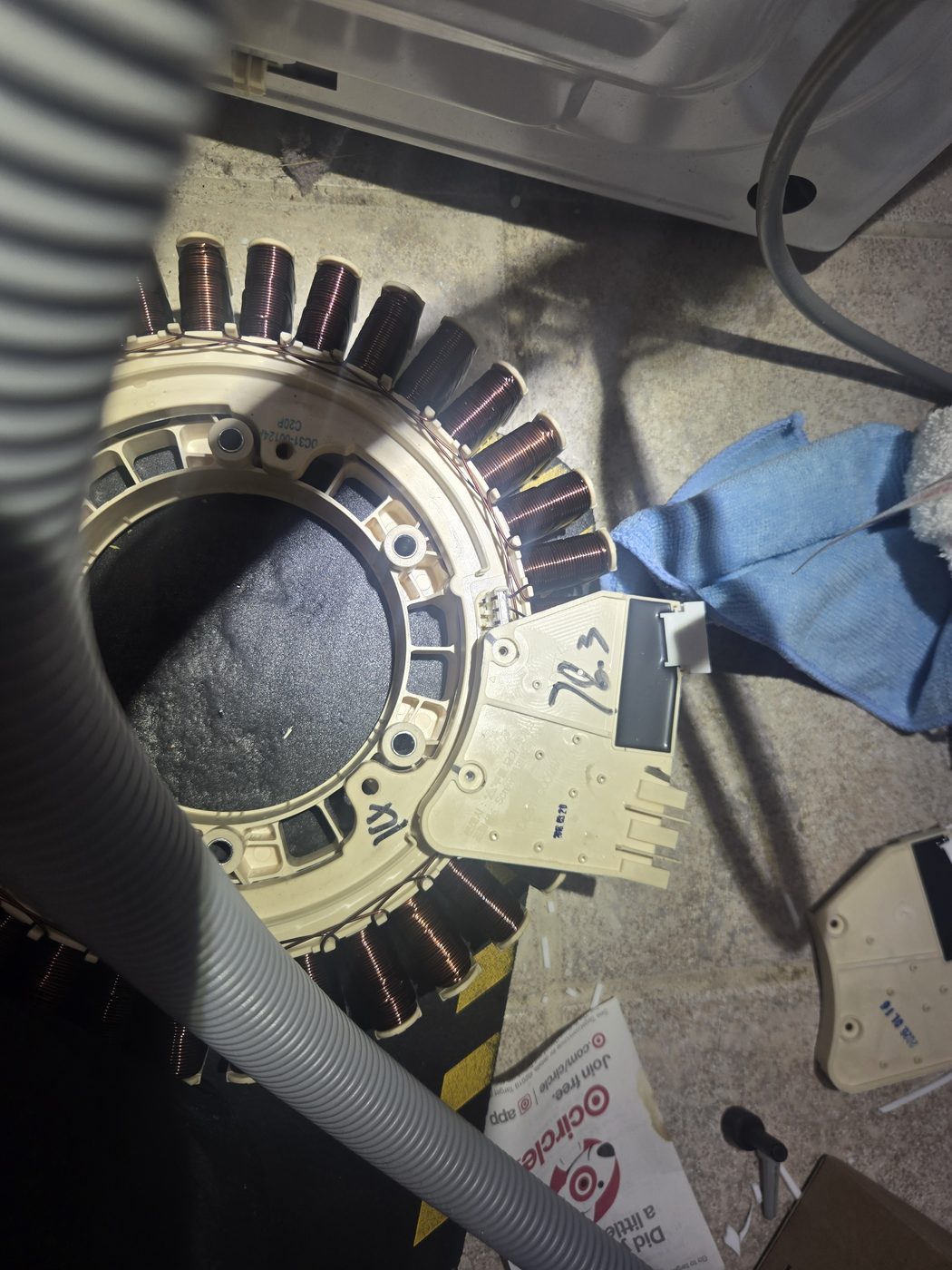 A direct-drive washer opened up — bearings and the stator are common wear points.
Common front-load failures
Front-load machines earn most of their service calls from a handful of predictable culprits.
Door boot and seal leaks
The flexible rubber gasket around the door takes a beating and traps lint, coins, and detergent residue. Over time it tears or grows mildew, and you get water on the floor during the wash. A boot replacement is a common, very fixable repair.
Drum bearings
Because the drum hangs horizontally, the rear bearings carry the full weight of a soaked load spinning at high speed. When they start to go you will hear a growing roar or grinding on the spin cycle. Bearings are a labor-intensive job because the machine has to come apart to reach them, but caught early it is often worth doing.
Drain pump and clogs
Front-loaders are sensitive to what gets past the filter. A sock or a fistful of coins in the pump will stop the machine mid-cycle and throw a drain error. Many models have an access filter you can clean yourself, which prevents a service call entirely.
Common top-load failures
Lid switch and lock
A top-loader will not spin if it does not believe the lid is closed. A worn lid switch is one of the most frequent no-spin complaints, and it is usually an inexpensive, quick fix.
Agitator, clutch, and transmission
On agitator models, the parts that create the back-and-forth motion wear over time. If clothes come out barely cleaned or the tub will not agitate, the culprit is often the agitator dogs, the clutch, or the drive components underneath.
Off-balance and suspension
Top-loaders rely on suspension rods or springs to keep the tub centered. When those wear, the machine walks across the floor and bangs during spin. Replacing worn suspension parts settles it back down.
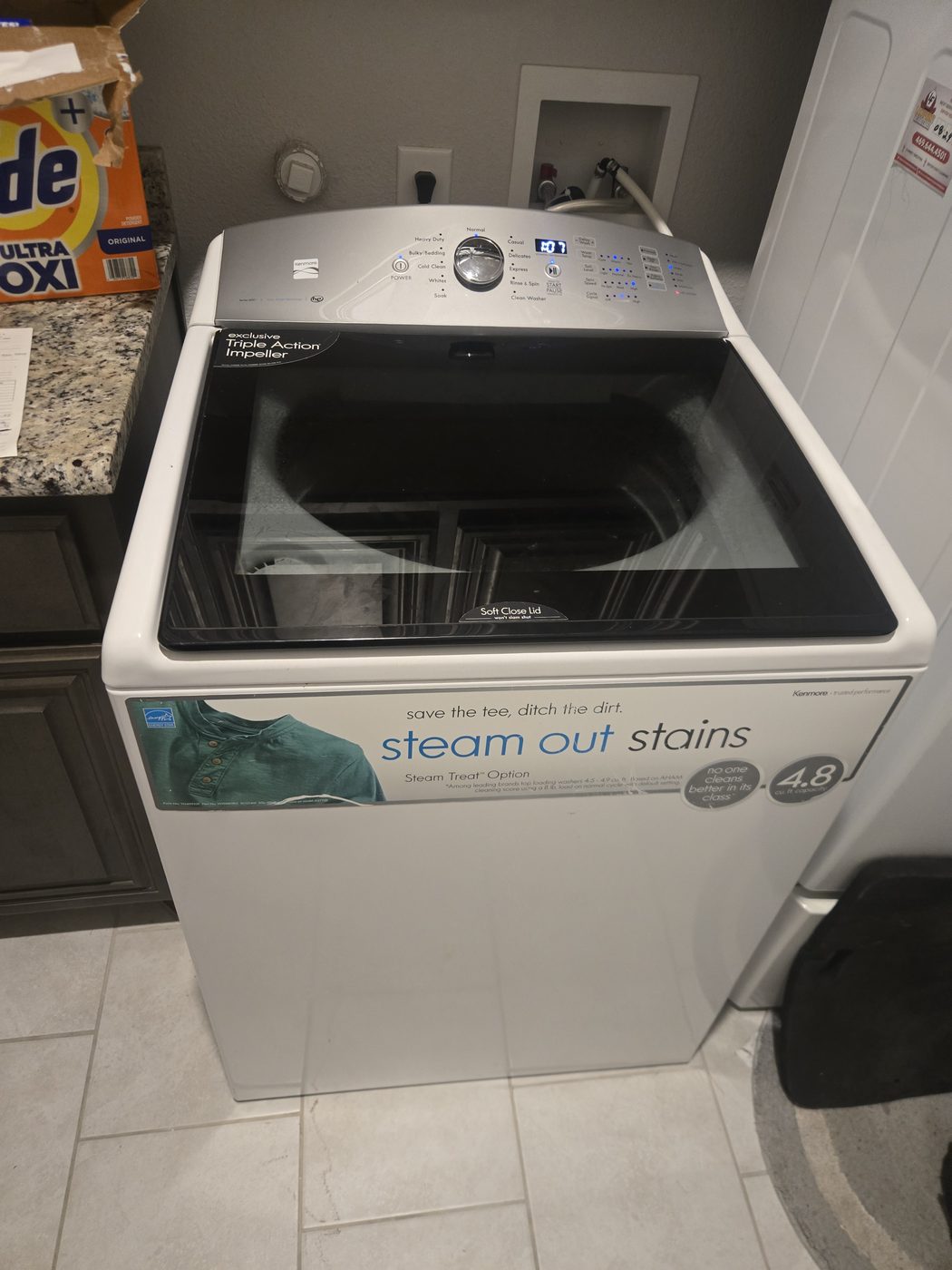 Top-load and front-load machines fail in different ways and cost different amounts to fix.
What tends to cost more
As a general rule, front-load repairs that involve the bearings or the outer tub are the most labor-heavy, simply because so much has to come apart to reach them. Top-load repairs like a lid switch, a drain pump, or a fill valve are usually quicker to access. That said, an electronic control board can be a bigger-ticket item on either type. We never guess at this. We diagnose first, then give you upfront pricing before any work begins, and we test and replace only the component that actually failed rather than swapping expensive assemblies on a hunch.
What you can safely check yourself
Before you call anyone, a few checks are safe and often solve the problem:
- Clean the front-load door boot and the pump filter, and check pockets for coins.
- Confirm the machine is level and the shipping bolts were removed on a newer front-loader.
- Make sure both water hoses are open and not kinked, and that the drain hose is not pushed too far down the standpipe.
- Redistribute a lopsided load that is tripping the balance sensor.
Where you should stop is anything involving the sealed motor wiring, a 240V circuit, or opening up the cabinet to chase a bearing or control board. Those jobs involve live electrical connections and heavy, awkward assemblies. That is not a safe DIY project, and it is worth calling a licensed pro.
When to call DLT
If your washer is leaking, refusing to spin, grinding on the spin cycle, or walking across the room, we can help. DLT Appliance Repair is family-owned and offers same-day service across the North Dallas Metroplex, including Garland, Mesquite, Richardson, Plano, Irving, and Carrollton. Every repair is backed by our written 90-day parts and 30-day labor warranty. Call (972) 674-0674 and we will get your laundry moving again.